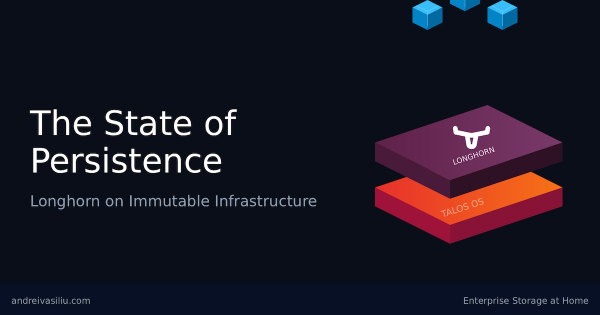
The Paradox of Statelessness # Kubernetes is designed to be ephemeral. Pods die, nodes are replaced, and the cluster heals itself. This “stateless” philosophy is efficient for application logic, but it hits a hard wall when you need to store data. Databases, message queues, and media servers all need a place to live that persists beyond a pod restart.
Locking it Down - From HTTP to HTTPS # In the preceding chapters, we established the networking foundation for a production-grade bare-metal Kubernetes platform.
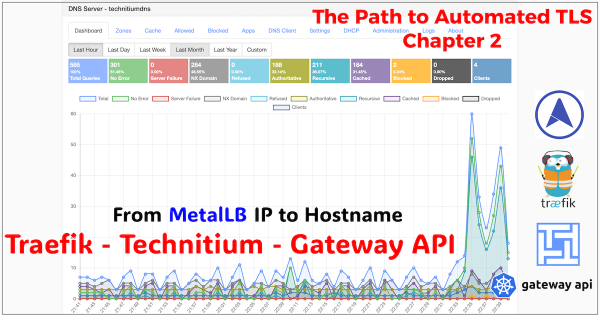
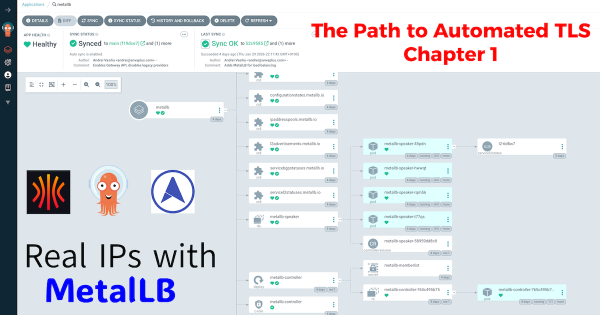
From IP Address to Intelligent Gateway # In Chapter 1, we laid the foundational pillar by solving the bare-metal IP address problem with MetalLB. Our test NGINX service successfully acquired the IP 10.20.0.90, proving our cluster can now serve traffic like its cloud-native counterparts.
The Path to Automated TLS: A Three-Part Guide # The path to achieving fully automated, production-grade TLS on a bare-metal Kubernetes homelab is a rewarding but detailed journey. To do it justice, I’ve structured this guide as a three-part series… a continuous story where each post builds on the last. Frankly, cramming everything into a single, monolithic article would be an overwhelming read.
In my last post, Stop Using the Wrong CNI: Why Your Homelab Deserves Cilium in 2026, we established a production-grade networking foundation for our Talos Kubernetes cluster. But a powerful CNI is only half the story. To truly manage our cluster like a professional, we must automate and declare everything.
In my last post, The Four-Repo GitOps Structure for My Homelab Platform, I laid out the architectural blueprint for managing my homelab like a production environment. Building on the automation I detailed in my popular post, Need for Speed: Automating Proxmox K8s Clusters with Talos Omni, we now have a cluster ready for a production-grade CNI. Now that we have a solid GitOps foundation and a running Talos Kubernetes cluster, it’s time to address a critical component: networking.
In my previous posts, I walked through installing Talos Omni and then manually provisioning a Talos Kubernetes cluster on Proxmox. Both were essential learning experiences. Getting Talos Omni running was a huge win, and understanding the manual provisioning process… from downloading the ISO, creating VMs, configuring static IPs in the console, and patching nodes… built a strong foundation. But the real game-changer wasn’t just running Kubernetes… it was discovering how quickly I could create it.
In the world of platform engineering, our goal is always to automate everything. But before we can appreciate the elegance of a fully automated workflow, it’s incredibly valuable to walk through the manual process at least once. It builds a deep understanding of what’s happening under the hood.